Real-Time Dam Levels
Across Australia

Track water storage, capacity and historical trends for major reservoirs in New South Wales, Victoria, Queensland and beyond.

57.3% National average
303 Dams tracked
87,729 GL Total capacity
06 Jun 2026 Last Updated
Lock 4 - Bookpurnong Water Level

Lock 4 - Bookpurnong Water Level

South Australia · Unknown
Reviewed by Water Resources Analyst
Hydrological Summary: Lock 4 - Bookpurnong currently stores 69.5% of its total 29 GL capacity. Located in SA and operated by SA Water, it is a critical water source for regional supply and irrigation.
Data officially sourced and updated from South Australia water authorities. Last dataset update: 2026-06-04 12:35:00
Current Storage Level 69.5%
Total Capacity
29 GL
Status
Normal / Safe
Operator
SA Water
Last Updated
04 Jun 2026
Live Weather
17°C Clear sky
Rain: 0mm | Hum: 57%

Water Level Analysis

Storage levels at Lock 4 - Bookpurnong are within moderate seasonal bounds. The current reading shows the reservoir at 69.5%, translating to 29 GL. While adequate, continuous monitoring is standard procedure for this catchment.

Catchment & Hydrological Impact

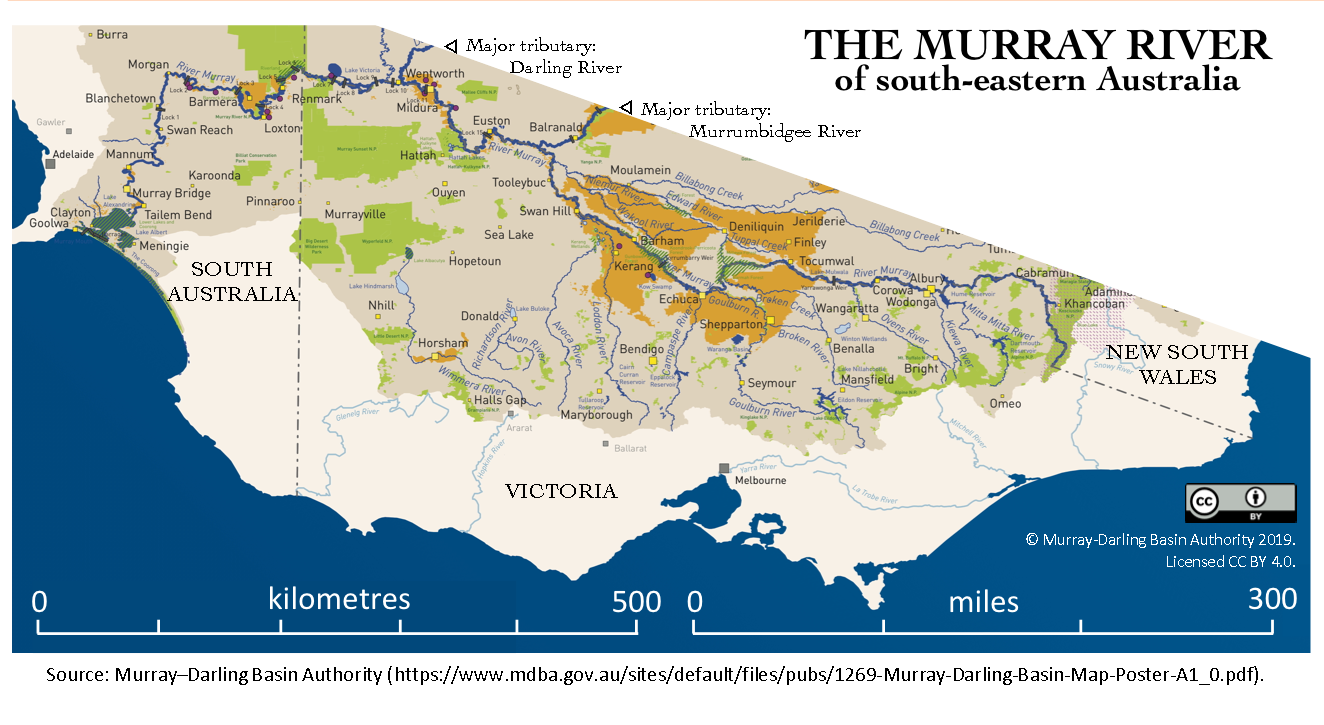
Fed primarily by the River Murray, this reservoir plays a critical role in the Murray-Darling Basin drainage division. Hydrological health in this specific drainage basin is vital for downstream ecosystems. The Murray-Darling Basin region relies heavily on the seasonal inflows captured here.

Agricultural & Economic Significance

Agriculture in the surrounding areas of South Australia depends heavily on the water security provided by Lock 4 - Bookpurnong. The local economy, heavily rooted in agriculture, fluctuates in tandem with the health of this reservoir. Without the buffer provided by this massive 29 GL storage, regional farming would face extreme volatility.

Ecological & Recreational Context

The surrounding catchment of Lock 4 - Bookpurnong also supports diverse local flora and fauna. During periods of healthy water levels, the area often sees an increase in recreational activities such as fishing, boating, and camping. Authorities must constantly balance the need for human water consumption with the ecological necessity of maintaining healthy river systems downstream.

Current Weather & Evaporation Impact

The weather around the catchment is currently recording 17°C. Currently experiencing clear sky conditions with no immediate precipitation, inflows remain entirely dependent on upstream river movement.

Future Outlook & Monitoring

Looking ahead, the trajectory of Lock 4 - Bookpurnong's water levels will depend heavily on upcoming seasonal rainfall patterns. Continuous telemetry and advanced hydrological modeling are employed to forecast storage changes. Given the unpredictable nature of Australia's climate, from La Niña flooding to El Niño droughts, maintaining a dynamic operational strategy for Lock 4 - Bookpurnong is absolutely essential.

Location Map

Frequently Asked Questions

What is the current water level of Lock 4 - Bookpurnong?
As of the latest official reading, the water level at Lock 4 - Bookpurnong is at 69.5% of its total capacity.
Is Lock 4 - Bookpurnong currently full?
It is partially full, currently holding steady at 69.5%.
What is the maximum water capacity of Lock 4 - Bookpurnong?
When completely full (100%), Lock 4 - Bookpurnong can hold up to 29 Gigalitres (GL) of water.
Where is Lock 4 - Bookpurnong located?
This reservoir is a critical water storage facility located in the state of South Australia, Australia.
How does the water level at Lock 4 - Bookpurnong affect local agriculture?
Water levels dictate the irrigation allocations for surrounding farmlands. A healthy level of 69.5% ensures that local farmers have the necessary water security for their seasonal crops and livestock.
Who manages the data for Lock 4 - Bookpurnong?
The data is sourced from official government authorities including the Bureau of Meteorology (BOM) and specific state water utilities.

Nearby Dams in South Australia

Largest Reservoirs in South Australia

Latest Water & Drought News

← Back to all dams