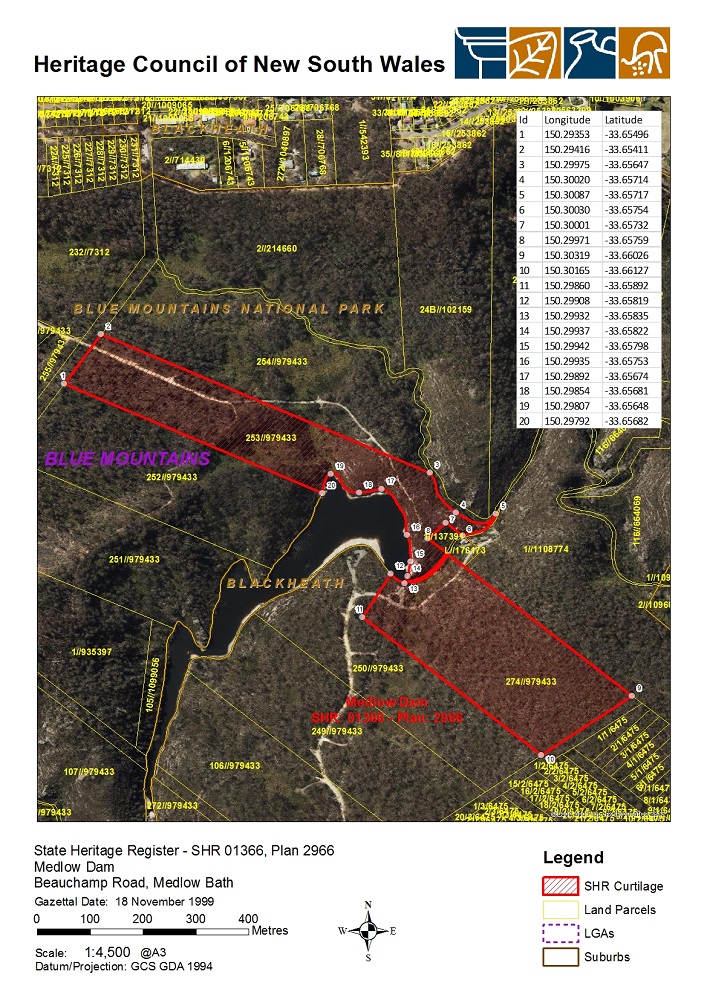
Water Level Analysis
Lake Medlow is currently operating near maximum storage limits. Standing at an impressive 100%, the total volume sits at 0 GL. This near-full status guarantees strong water availability for local communities and agriculture.
Catchment & Hydrological Impact
The Adams Creek acts as the primary lifeblood for Lake Medlow, making it a cornerstone of the South East Coast (NSW) network. Managing the flow from the Adams Creek ensures that downstream agricultural zones receive consistent supply. Catchment dynamics in the South East Coast (NSW) are deeply influenced by the retention capacity of Lake Medlow.
Agricultural & Economic Significance
Beyond standard municipal supply, Lake Medlow is a vital asset for the regional agricultural economy in New South Wales. Farmers and agribusinesses monitor these levels closely to plan their seasonal crop yields. Sustainable water management here ensures that both crops and livestock can survive prolonged dry spells.
Ecological & Recreational Context
The surrounding catchment of Lake Medlow also supports diverse local flora and fauna. When capacity allows, Lake Medlow becomes a hub for regional tourism and water sports. However, environmental flow releases must be carefully balanced to protect downstream river health.
Current Weather & Evaporation Impact
Cooler current temperatures of 12°C help minimize evaporation losses across the reservoir. Under current clear sky weather, there is no direct rainfall contributing to the immediate storage levels.
Future Outlook & Monitoring
The Bureau of Meteorology's climate outlooks will play a pivotal role in predicting the future inflows for this catchment. State water authorities utilize highly sophisticated monitoring tools to ensure every drop is accounted for. Resilience against extreme weather events remains the ultimate goal for the managers of this critical infrastructure.