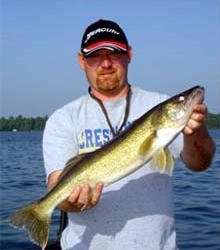
Biology & Profile
Known scientifically as Sander vitreus, the Walleye is highly sought after by anglers in lake,river,reservoir environments. The walleye is the most popular sport fish in the northern United States and Canada. Named for its distinctive milky, glassy eyes that reflect light in the dark, walleye are expert low-light predators that feed aggressively at dawn, dusk, and night. They are widely considered the best-tasting freshwater fish in North America.
Habitat & Diet
The ideal habitat for Walleye typically consists of Prefers large, cool lakes and slow-moving rivers with sandy or rocky bottoms. Active at night and during low-light conditions. In summer, moves to deeper, cooler water during the day..
Primary Diet: Primarily piscivorous (fish-eating), with yellow perch, shad, and minnows being primary prey. Also eats crayfish and invertebrates.
Fishing Tips & Best Baits
Fish at dawn, dusk, and at night for best results. Use jigs tipped with minnows along rocky points and drop-offs. Trolling crankbaits at precise depths is highly effective on large lakes. In rivers, drift live minnows through current seams.
Top Baits/Lures: Live minnows on jig heads, crankbaits, blade baits, jigging spoons, nightcrawlers on Lindy rigs
Best Seasons: spring,fall,winter