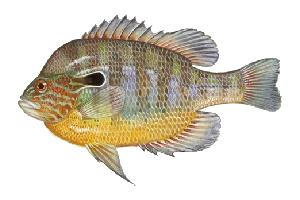
Biology & Profile
Known scientifically as Lepomis macrochirus, the Bluegill is highly sought after by anglers in lake,river,reservoir,pond environments. The bluegill is the most abundant and widely distributed sunfish in the United States, and the fish that introduces more children and beginners to angling than any other species. Despite their small size, bluegill are aggressive fighters on light tackle and provide year-round action. They are also excellent eating, with sweet, white meat.
Habitat & Diet
Anglers have the most success finding Bluegill near Extremely adaptable — found in ponds, lakes, reservoirs, and slow-moving rivers. Prefers weedy, shallow water but found throughout the water column in summer..
Primary Diet: Insectivores feeding on worms, insects, small crustaceans, zooplankton, and small fish. Will hit almost any small offering.
Fishing Tips & Best Baits
Simple light tackle fishing with worms under a bobber is classic. Fly fishing with small dry flies or poppers is incredibly fun. Target spawning beds in shallow water (2-6 feet) in late spring to early summer. Use 2-6 lb test line for best action.
Top Baits/Lures: Small worms, crickets, wax worms, small jigs, small flies, tiny spinners
Best Seasons: spring,summer